
By the Pressure Washing Clean team · Published November 4, 2026 · Updated November 4, 2026
Paver sealing cost in Lutz, FL usually follows national ranges of about $1 to $3.25 per square foot. Angi (2025 data) puts the national average near $2 per square foot for cleaning and sealing. Your final price depends on size, paver condition, joint sand and the sealer you choose.
Want a real number for your pavers? Call (813) 808-6692 or request a free written estimate. We answer 8am to 8pm, seven days a week.
We do not post a price list. Every patio, pool deck and driveway is different. Below are the published national ranges, what moves the price up or down, and how Florida weather affects timing.
National guides put professional paver cleaning and sealing at roughly $1 to $3.25 per square foot. Angi reports an average of about $2 per square foot, using 2025 data. HomeGuide lists $1.50 to $3.25 per square foot, with cleaning, joint sand and sealer included.
These are national ranges, not Pressure Washing Clean prices. They help you check whether a quote is in a normal range. We give every Lutz homeowner a free written estimate after we see the pavers.
| Area sealed | Price per sq ft | Example total | Source |
|---|---|---|---|
| About 200 sq ft patio | $1 to $3 (avg. about $2) | $300 to $550 (avg. about $400) | Angi, 2025 data |
| Under 500 sq ft | $2.20 to $3.25 | 500 sq ft: $875 to $1,475 | HomeGuide |
| 501 to 2,000 sq ft | $1.75 to $2.95 | 1,000 sq ft: $1,750 to $2,950 | HomeGuide |
| Over 2,000 sq ft | $1.50 to $2.20 | 3,000 sq ft: $4,500 to $6,600 | HomeGuide |
HomeGuide does not show a publish date on its cost page. We checked its figures on November 4, 2026. Angi labels its figures as 2025 data.
Many Lutz homes pair a paver driveway with a paver pool deck inside a screen enclosure. Add the two areas together to estimate your total square footage. Then use the matching row in the table above as a rough guide.
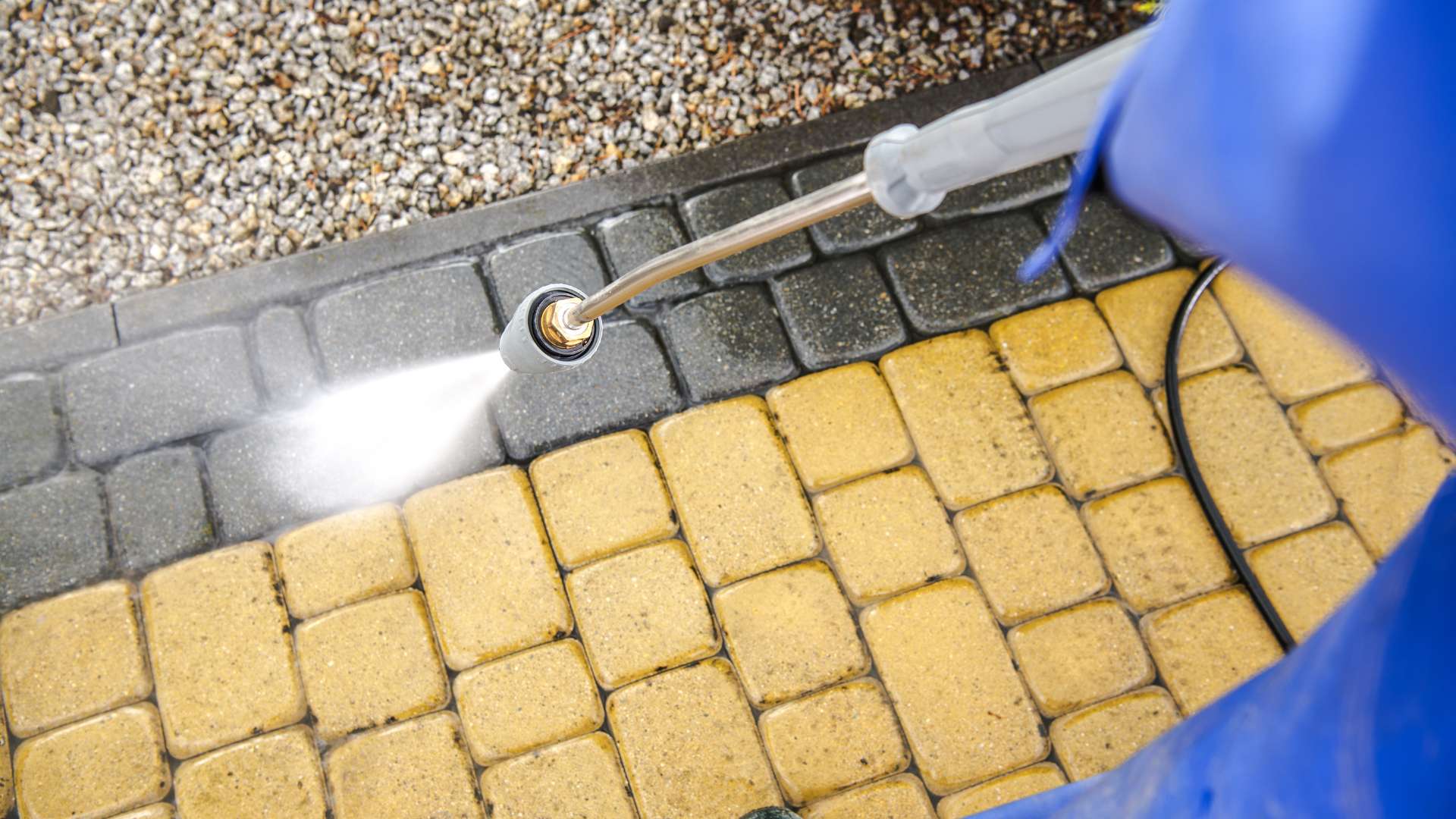
Five things move the price most: size, dirt and stains, missing joint sand, efflorescence and sealer type. Extra prep, such as weeding, stain treatment or paver repairs, adds labor time. A clean, recently sanded surface costs the least to seal, so regular upkeep pays off.
Setup, travel and cleanup cost about the same on small and large jobs. That is why small patios cost more per square foot. Sealing your driveway and pool deck on the same visit often lowers the rate per square foot.
Black mildew, algae, rust and oil spots need treatment, because sealing over a stain locks it in. Angi notes that weeding, stain removal and paver repairs all raise labor costs.
Pressure washing pulls some sand out of the joints, the gaps between pavers. The crew refills them before sealing so the pavers stay locked together. Pavers that have lost a lot of sand need more material and more time.
Regular joint sand is plain, fine sand swept into the gaps. Polymeric sand is sand mixed with a binder that hardens after you wet it. The Concrete Masonry & Hardscapes Association (CMHA) tech note PAV-TEC-005-22 calls this kind of product a dry joint sand stabilizer.
Polymeric sand costs more than plain sand. CMHA says stabilizing joint sand is generally optional. It recommends stabilization for heavy rain, concentrated water flow and areas near downspouts and roof eaves.
Efflorescence is a white, powdery haze that rises out of concrete pavers. CMHA says it does not hurt the pavers, but it must be removed before sealing. Removal takes a special cleaner and extra labor, so it adds to the price.
HomeGuide lists water-based sealer at $42 to $70 per gallon and solvent-based sealer at $32 to $55 per gallon. The finish you pick, wet-look or natural, also changes which product the crew uses. The next section compares the two.
Choose wet-look for darker, richer color with some shine, or natural for an unsealed look and more grip. In CMHA terms, wet-look sealers are usually acrylics or urethanes. Natural sealers are usually silanes or siloxanes, which soak in and leave a flat finish.
| Feature | Wet-look (acrylic or urethane) | Natural (silane or siloxane) |
|---|---|---|
| Look | Darker color, gloss or sheen | Flat, close to unsealed |
| Grip | High gloss can get slippery | Keeps more of the original texture |
| Stain resistance | Acrylics resist stains well; urethanes resist oil and chemicals | No resistance to oil stains unless specially made |
| Moisture | Forms a surface coat | Lets water vapor escape and helps resist efflorescence |
| Best fit | Driveways and entry walks where color matters | Pool decks and walkways where grip matters |
Table based on CMHA PAV-TEC-005-22 (revised 2022). CMHA also warns that aromatic urethanes need a UV inhibitor. That matters under the strong Florida sun.
Most guides say every 3 to 5 years, and HomeGuide ties that to sealer type, traffic, climate and trees. Angi says solvent-based sealer lasts up to five years and water-based sealer about two. Strong sun, heavy summer rain and shade from trees can shorten that in Lutz.
The National Weather Service in Tampa Bay sets the local rainy season at May 25 to October 10. Months of storms push water through joints and wash out loose sand. Shaded, damp areas also grow mildew and algae faster.
CMHA says sealers need reapplication after wear and weather, based on use, climate and sealer quality. It says acrylics generally last a few years before recoating.
On paper, yes: Angi puts DIY at about $220, roughly $270 less than a pro (2025 data). That covers cleaner, sealer and a pressure washer rental. It leaves out your weekend and the cost of fixing a cloudy or streaky job.
Angi lists DIY supplies at $15 to $30 for cleaner and $40 to $200 for sealer. A pressure washer rental adds $40 to $100 per day. You also need joint sand, and CMHA advises at least 24 dry hours before most sealers.
The most common problem is a white, cloudy finish. CMHA links it to wet pavers or joints, poor base drainage or sealer applied too thick. Too much pressure can also blast out joint sand or etch the paver face.
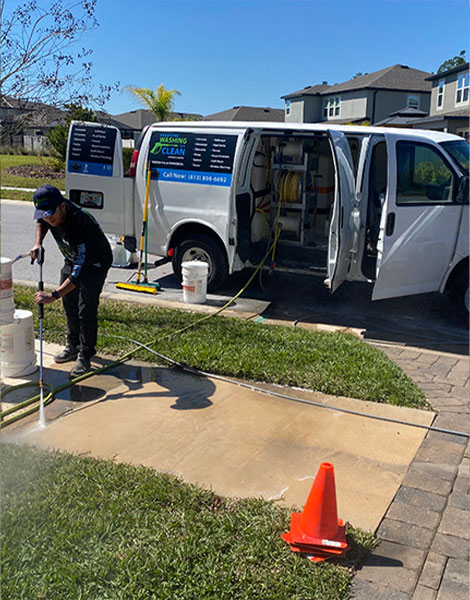
A pro crew brings commercial cleaning gear, matches the sealer to your pavers and handles the timing. Learn more on our Lutz paver cleaning and sealing service page.
Check before you seal if you live in an HOA, such as Cheval or Heritage Harbor in Lutz. A clear, natural sealer rarely changes the look, but a wet-look sealer darkens color. Some HOAs treat a color change as an exterior change that needs review.
Under Florida Statutes section 720.3035 (2026), an HOA may review a home's look only if its documents allow it. Those rules must also be applied the same way to every owner. Your declaration of covenants and the architectural guidelines tell you what applies to you.
We also work with associations directly. See our HOA community pressure washing services.
The best time is a dry stretch outside the rainy season, roughly mid-October through late May. The National Weather Service dates West Central Florida's rainy season from May 25 to October 10. CMHA calls for at least 24 hours without moisture before most sealers go on.
Yes, with careful timing: crews start early, watch the radar and skip days with storm chances. Water-based sealers are more forgiving because some can go on a damp surface. If rain is likely before the product cures, the job should be moved.
Turn off irrigation the day before and the day of sealing. CMHA also lists turning off automatic sprinklers as a prep step for cleaning. Overspray on fresh sealer can leave spots or a cloudy finish.
Measure your patio, pool deck and driveway, and take clear photos before you call. Ask for a written quote that lists cleaning, joint sand and sealer separately. Also ask which sealer and finish they will use, and how they treat efflorescence and stains.
Pressure Washing Clean is a licensed general contractor and fully insured. Our technicians are trained and certified through the Doug Rucker School program. See our pressure washing services in Lutz, FL, plus Land O' Lakes, Wesley Chapel and Odessa.
Current offers through December 31, 2026: 10% off for new clients, and $75 off pressure-washed pavers or a concrete driveway. Comparing companies? Read our guide to choosing the best pressure washing company in Lutz.
Usually not, because the Concrete Masonry & Hardscapes Association says efflorescence may peak around 60 days after installation. Sealing over that white haze can trap it under the sealer. Ask your installer when your paver maker says the pavers are ready to clean and seal.
No, because sealer protects the surface and helps hold joint sand but adds no strength. CMHA guidance says sealers do not increase load-bearing capacity, and sunken spots come from the base below. Those areas must be lifted, re-based and relaid before anyone cleans and seals the surface.
It can, because CMHA notes that glossy surfaces can become slippery. High-gloss film sealers carry the most risk around pools and on sloped walkways. A natural or low-sheen sealer keeps more grip, so ask about grip before choosing a wet-look pool deck finish.
Usually yes, because HomeGuide's per-square-foot range bundles pressure washing, joint sand and sealing. Bought on its own, cleaning runs $0.35 to $0.80 per square foot, according to HomeGuide. Ask each company to list cleaning, sanding and sealing separately so you can compare quotes fairly.
It helps, but it does not guarantee results. CMHA says sealers can help deter weeds and insects and can help stabilize joint sand. Firm joints help, but seeds can still land on top and sprout, so plan light upkeep between sealings.
It depends on the sealer and the weather, and each product label lists its own dry times. Humid days and shade slow drying, so your crew should tell you the exact wait for their product. Keep sprinklers off during that time, too.
Call (813) 808-6692 or request a free written estimate online. We will look at your pavers, explain your sealer options and give you a clear price. We answer 8am to 8pm, seven days a week.
Licensed, insured and Doug Rucker School trained. Free estimates for homes and businesses across North Tampa Bay.
