
By the Pressure Washing Clean team · Published November 4, 2026 · Updated November 4, 2026
Pressure washing before painting in Wesley Chapel belongs 24 to 48 hours before the first coat, per Sherwin-Williams guidance. Use a soft wash on stucco, wood trim and vinyl so the surface is not damaged. Then let every wall dry fully, because paint will not hold on damp or mildewed walls.
Want the wash done right before your painters show up? Call (813) 808-6692 or request a free estimate. We serve homes across Wesley Chapel, Lutz, Land O' Lakes and Odessa.
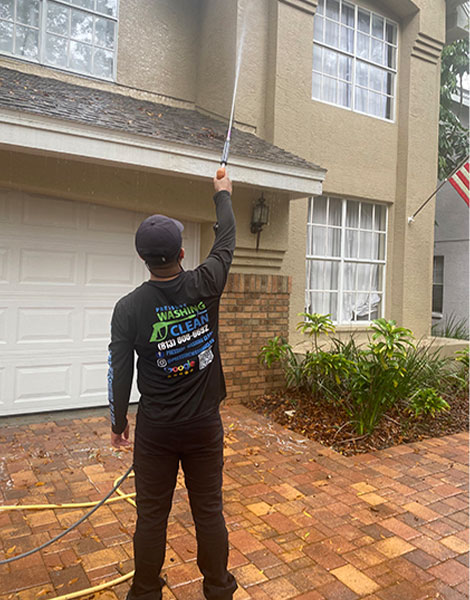
Wait at least 24 to 48 hours after washing before you paint. Sherwin-Williams and Angi both give that same range for exterior painting jobs. In Wesley Chapel humidity, shaded stucco and block may need longer, so test for dryness before painting.
Paint sticks to a dry surface. Water left in the wall pushes against the new film as it evaporates. Angi warns that painting too soon can trap moisture and cause bubbling or mold.
North-facing walls, walls behind shrubs and walls under deep eaves dry slowest. Those are the spots to check last. A sunny south wall may be ready a full day sooner.
Drying time is only half the plan. Sherwin-Williams advises against painting below 50°F or above 90°F. It also says exterior paint needs about 24 hours to cure before rain hits it.
Humidity matters too. Federal GSA stucco painting guidance says not to apply paint when relative humidity tops 85%. On a muggy summer morning, that can push your start time later in the day.
Paint bonds to whatever it touches, so dirt, pollen or mildew becomes the base instead of the wall. Sherwin-Williams lists pressure washing to remove dirt, mildew and loose paint as a core prep step. A clean wall gives the new coat a sound, even surface to grip.
In Wesley Chapel, walls collect more than dust. Sprinkler overspray, soil splash and green algae build up along the lower walls. Pollen and road film from busy corridors like State Road 54 and State Road 56 settle on eaves and trim.
A house wash removes that layer so the painter can see the real surface. Cracks, soft wood and failing caulk show up clearly once the grime is gone. Our Wesley Chapel house washing service is built for exactly this kind of prep.
Most painted surfaces on a Wesley Chapel home should get a soft wash: a cleaning solution at low pressure. High pressure is only for hard, bare surfaces like unpainted block or concrete. The table below shows the safer method for each common surface before painting.
| Surface | Best method before painting | Why | Watch out for |
|---|---|---|---|
| Stucco | Soft wash | GSA guidance calls for low-pressure water (80–100 psi) or a garden hose with detergent. | Stucco soaks up water. Let it dry fully and test it before painting. |
| Wood trim and fascia | Soft wash | A cleaning solution kills mildew without forcing water deep into the wood. | Sherwin-Williams advises spraying with the grain to avoid surface damage. Scrape loose paint by hand. |
| Concrete block (painted) | Soft wash | Cleans the existing paint film without stripping sound paint. | Block holds water in its cores. Give it the full drying window. |
| Concrete block (bare) | Pressure wash at moderate pressure | Bare block can take more pressure to lift dirt and efflorescence (white mineral salts). | Keep the tip moving at a steady distance. Let the cores dry fully. |
| Vinyl siding | Soft wash or low pressure | The Polymeric Exterior Products Association says to follow the siding maker’s limits. | Never aim the spray upward. Water can get behind the panels. |
Pressure washing relies on force to blast grime off. Soft washing relies on the cleaning solution to kill and loosen growth, then rinses it at low pressure. Our house exterior soft washing page explains the process in more detail.
Vinyl needs one extra check. The Polymeric Exterior Products Association says to ask your siding maker before painting vinyl. Painting it could void the product warranty.
Clean the gutters, protect plants, soft wash the walls and rinse them well. Let the house dry for at least 24 to 48 hours, then test the moisture. Scrape, patch, caulk and prime bare spots before the finish coats go on.
Move patio furniture, grills and planters away from the walls. Close all windows and doors. Turn off exterior outlets and cover light fixtures if they are loose.
Clear leaves and debris from the gutters before the house wash. That keeps dirty runoff off the clean walls. You can book gutter cleaning on the same visit.
Soak shrubs and grass near the house with plain water first. Wet leaves absorb less cleaning solution. Rinse them again after the wash.
Apply the cleaning solution from the bottom of each wall upward. This stops clean streaks from forming as it runs down. Then rinse from the top down with plenty of clean water.
Look for black or gray specks under eaves and on shaded walls. Benjamin Moore says to clean and sanitize surfaces before painting, whether mildew is visible or not.
Give the house at least 24 to 48 hours, per Sherwin-Williams. Add time after rain or on cloudy, humid days. Shaded walls need the longest.
A moisture meter takes the guessing out of it. Dunn-Edwards lists 12% moisture or less for stucco and masonry. It allows up to 15% for exterior wood.
Scrape any paint that still flakes after the wash. Sherwin-Williams says to fill holes and cracks with exterior-grade filler and sand rough spots. Prime bare areas so the finish coat bonds evenly.
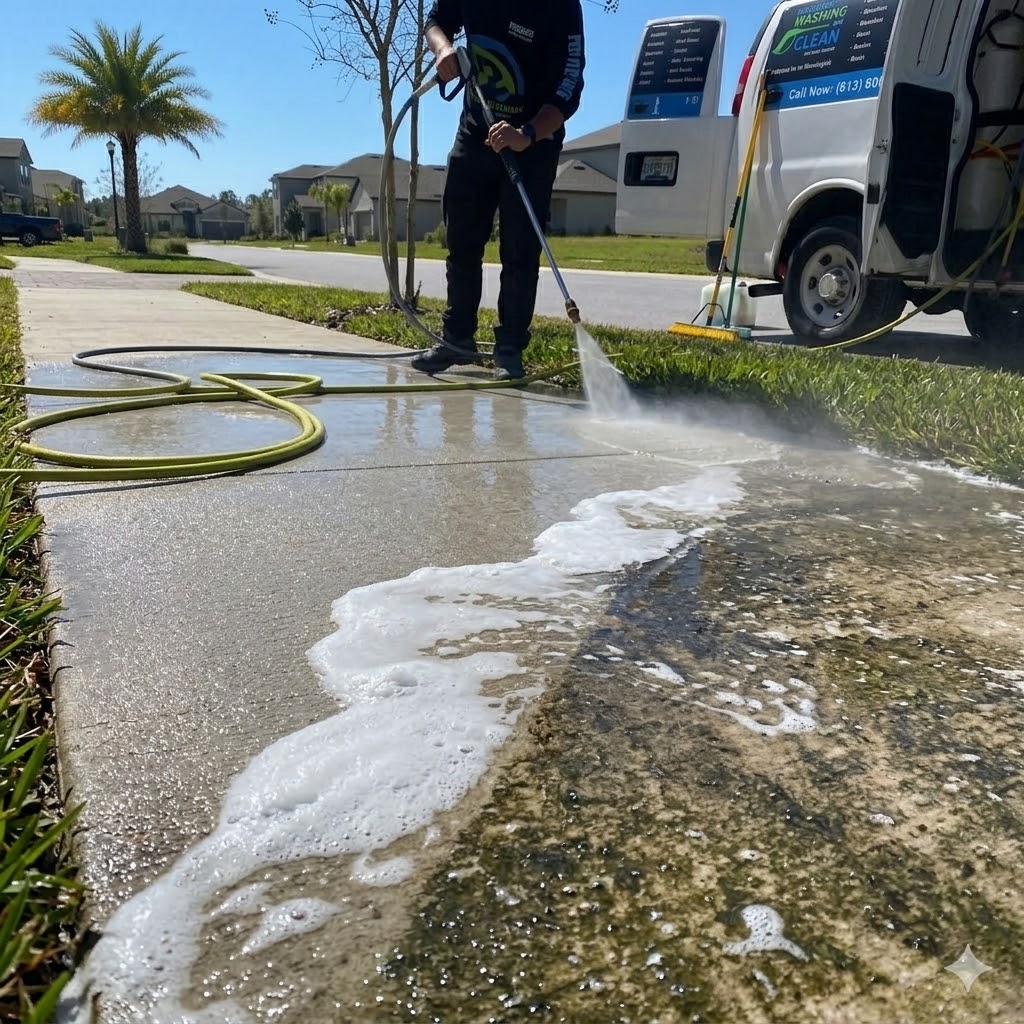
Yes, stucco is porous, so it soaks up wash water and releases it slowly. Dunn-Edwards lists 12% moisture or less as acceptable before painting stucco. In humid weather, shaded stucco may take the full 48 hours or longer to reach that level.
High pressure can drive water deep into the wall and chip the finish. GSA stucco guidance calls for low-pressure water at 80 to 100 psi, or a garden hose. It also says to avoid detergents that contain ammonia.
Stucco can develop hairline cracks over time. Water can enter those cracks during a wash. That is one more reason to test moisture instead of guessing.
Wet stucco looks darker in patches, often near the ground or below windows. It may feel cool and damp to the touch. If one wall looks blotchy, wait and test again.
Mildew keeps growing under new paint and shows through again, which makes later cleaning harder. Benjamin Moore says never to paint over mildew, because it will grow through the new coat. Killing it before painting protects the money you spend on the paint job.
Mildew thrives in Wesley Chapel's warm, wet climate. Look under eaves, behind shrubs and on north-facing walls. Our Wesley Chapel pressure washing team can treat it during a house wash.
Sherwin-Williams suggests a simple bleach test on a dark spot. If the bleach clears it, it is probably mildew. If the spot stays, it is probably dirt.
For cleaning mildew yourself, Benjamin Moore suggests three parts water to one part bleach. Scrub with a soft brush, rinse well and let the surface dry.
Be careful with any home built before 1978, because paint from that era may contain lead. The EPA Renovation, Repair and Painting Rule covers paid work that disturbs paint in those homes, including painting prep. Newer homes fall outside the rule, so confirm your build year before any washing that lifts old paint.
The EPA says paid workers who disturb paint in covered homes must be certified. Small jobs are exempt if they disturb 20 square feet or less of exterior paint. The Florida Department of Health notes the rule usually does not cover owners working on their own homes.
The EPA lead-safe steps booklet calls for plastic sheeting on the ground 10 feet out from exterior work. It also says to close doors and windows within 20 feet.
Your closing papers usually list the year built. The Pasco County Property Appraiser also keeps public records on local parcels. If your home is pre-1978, have the paint tested before any washing that could strip it.
Many do, so check your community's rules before you buy paint. Under Florida Statutes section 720.3035, an HOA can review exterior appearance when its governing documents give it that power. Seven Oaks, Meadow Pointe, Wiregrass Ranch and Epperson each have their own documents, so read yours or ask management.
Send in your color request before you book the wash. Approval can take time, and you do not want to wash twice. Once approved, schedule the wash 24 to 48 hours ahead of the painters.
Some associations also send notices for dirty roofs, walls or driveways. Our HOA community pressure washing services help boards and managers keep whole neighborhoods clean.
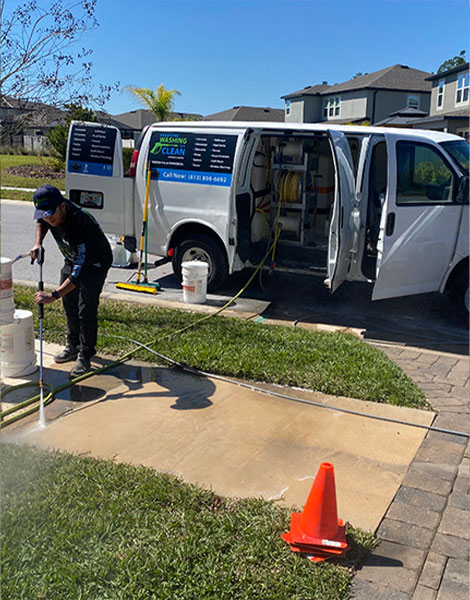
Late fall through spring is usually easiest, because less rain falls to rewet walls between the wash and the paint. NOAA's 1991–2020 normals for Tampa show about 49.48 inches of rain a year. About 61% of it, 30.24 inches, falls from June through September.
The National Weather Service Tampa Bay office lists August as the wettest month, at 9.03 inches. November is the driest, at 1.40 inches. December through April each average about 2.5 to 2.7 inches.
If you paint in summer, wash early in the week and watch the forecast closely. Remember the paint needs about 24 hours before rain, per Sherwin-Williams.
Cool mornings bring dew, so let walls dry before the first coat. Keep the Sherwin-Williams 50°F minimum in mind on the coldest days.
No, because paint needs a dry surface to stick, and Sherwin-Williams says to allow 24 to 48 hours. Painting the same day can trap moisture and cause bubbling or mold, according to Angi. Plan the wash for a day or two before the painters arrive.
It can, because rain puts water back into stucco, block and wood. Treat the surface as wet until a painter's moisture meter shows it is dry again. Dunn-Edwards lists 12% or less for stucco and masonry, and up to 15% for exterior wood.
Washing removes dirt, mildew and some loose paint, and Sherwin-Williams lists all three as pre-paint targets. Paint that still flakes after the wash needs scraping and sanding. Do not raise the pressure to blast it off, because scraping gives you more control.
Yes, if they are full, because cleaning gutters first keeps debris from washing down clean walls. It also lets the crew rinse the gutter faces along with the rest of the house. That way you only wash once, and gutter cleaning can be booked on the same visit.
Benjamin Moore suggests three parts water to one part household bleach, or a cleaner made to kill mildew. Scrub with a soft brush, rinse well, then let the surface dry completely. Professional soft washing uses a mildew-killing solution at low pressure for the same result.
Not always, as long as the crew has outdoor water access and clear paths around the house. Close windows, move patio furniture and park cars away from the walls before we arrive. Tell us about pets, plants or loose trim, and join a quick walk-around if you like.
A careful soft wash is the first step to a paint job that lasts. We clean stucco, trim, block and vinyl at safe pressure, then share a clear dry-time plan for your painter. We are licensed, fully insured and open 8am to 8pm, seven days a week.
Call (813) 808-6692 or request your free estimate. New clients get 10% off through December 31, 2026.
Licensed, insured and Doug Rucker School trained. Free estimates for homes and businesses across North Tampa Bay.
